Wing Windows

IMG_20160215_110010637.jpg

The wing windows curve around the front sides of the Airstream, and like everything else, ours need some work.  The windows are made of two panes of tempered glass with butyl tape in between.  When the butyl tape fails, moisture can enter the space between the windows and condense, which looks pretty bad.  Today, the moisture has frozen, so now I have frost between the two panes of glass instead of the usual droplets.

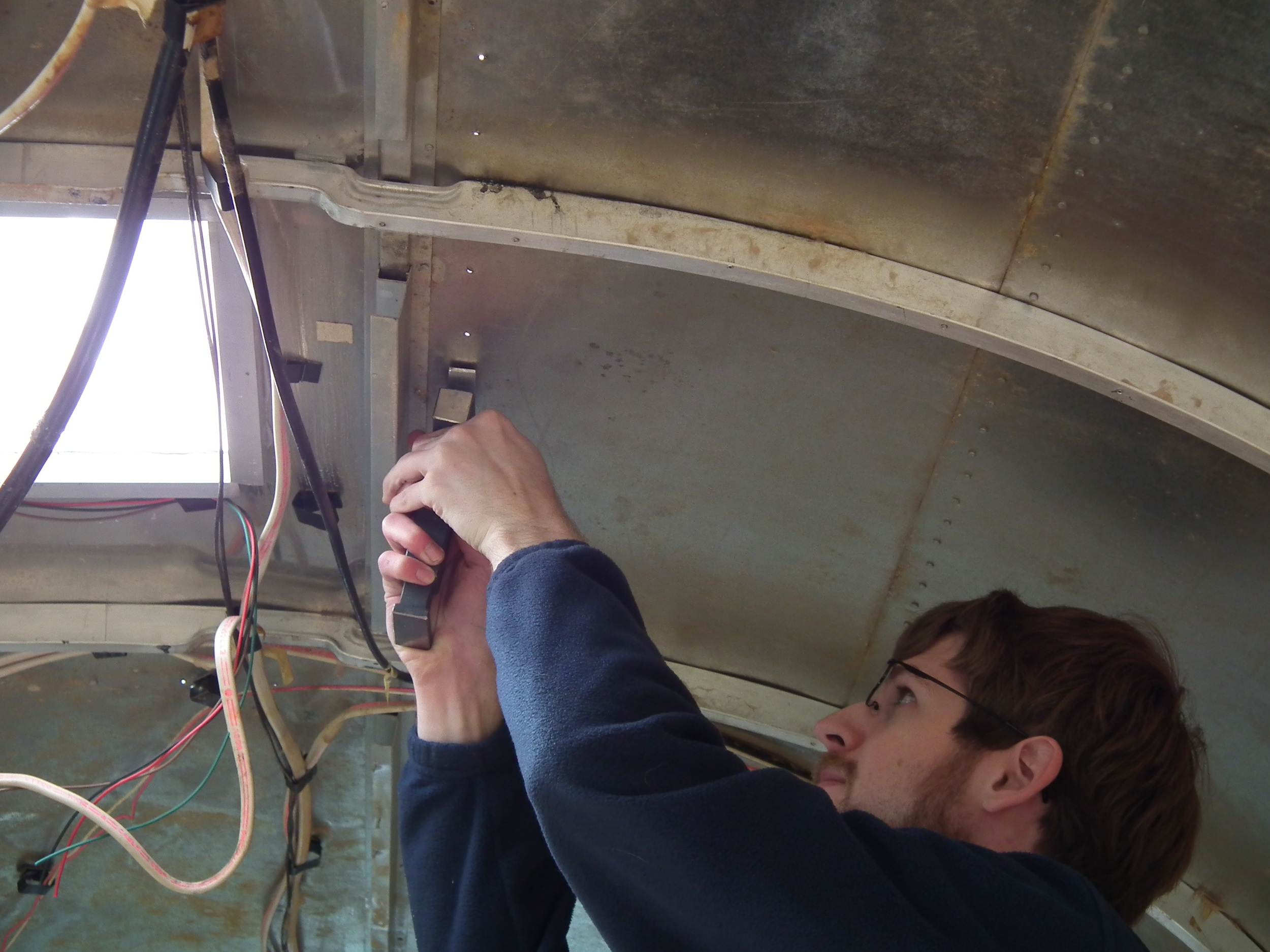
I haven't been able to find where anyone has disassembled these windows to repair them.  New ones cost $300 a piece.  The only advice I've found is to very carefully break and remove an interior pane, and then finish the window as a single pane.  Insulation is pretty important to me, so I'm going to try to fix it.  Step one, remove the vertical aluminum strips with a wood block and a hammer.

Quick note: I removed the aluminum strips by pushing them downward.  I later found someone who told me it was far easier to remove them by pushing them up instead.  I haven't tried it that way, but it's worth a shot.

Next, I drilled out all the rivets and pried the Vulkem off the backs to release the window from the coach.  Both of my wing windows were installed with Olympic rivets.  Those are the "blind" rivets you use when you can't access the back of the surface.  But then, they were sealed from behind with about a gallon of Vulkem.  Why didn't they just use regular rivets if they had access to the back of the window?  I'll add that to the list of Airstream mysteries. 

Now that I've got the window out, I need to remove the glass from the frame.

Four screws per window -- two each in the top and bottom of the vertical section. Then, pry the corners apart with a screwdriver. The straight vertical section came out without any trouble, but the curved bit needed a little coaxing.  What seemed to work best is to wedge my screwdriver in the side, and hit the top of the screwdriver with a hammer while holding the window pane.  Alternating sides a few times got the window out.

Next, I need to pry the rubber glazing strip off the window, being very careful not to damage it.  Like many parts on a vintage Airstream, I can only assume the glazing strip is made of unobtanium.  After loosening around the perimeter, the best place to pry the rubber off the glass was the curved corner.  Once I freed a corner, the rest slid off easily.

Once I removed the foil tape around the perimeter, I ended up with two panes of glass held together by a mess of butyl tape.

Removed the butyl tape with a paint tool.  This stuff is really stuck on there, I'm astonished it failed.

Better measure the gap before I get too far along.  3/16". 

Once I freed the curved edge, I was able to separate the panes and remove the vertical section of butyl tape fairly easily.

Glass panes clean up pretty easily with a fresh razor blade, some GooGone, Windex, and a microfiber towel.  Have to make sure the inside panes are perfect before reassembly.

Here's the second window.  I found the culprit!  See that little gap at the top of the butyl tape, under the window?  That's my point of failure.  Butyl tape cannot be trusted.

A week later, and I've got my 3/16" polyshim butyl tape from Vintage Trailer Supply.  I'm using this stuff to hold the panes of glass apart more than to seal anything.  It's got a little rubber tube embedded in the tape to keep everything exactly 3/16" apart.  I've laid this tape down with a little extra room on the edge.

Second pane goes on top, and I filled the perimeter gap with TremPro.  That should keep it sealed for good.
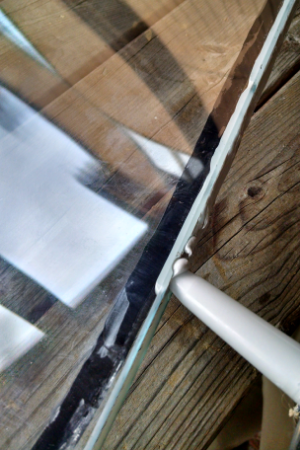
Ready for the rubber glazing strip.

Rubber glazing strip installation is the reverse of removal.  Everything goes on really easy except for the last curved corner, which is a giant pain.
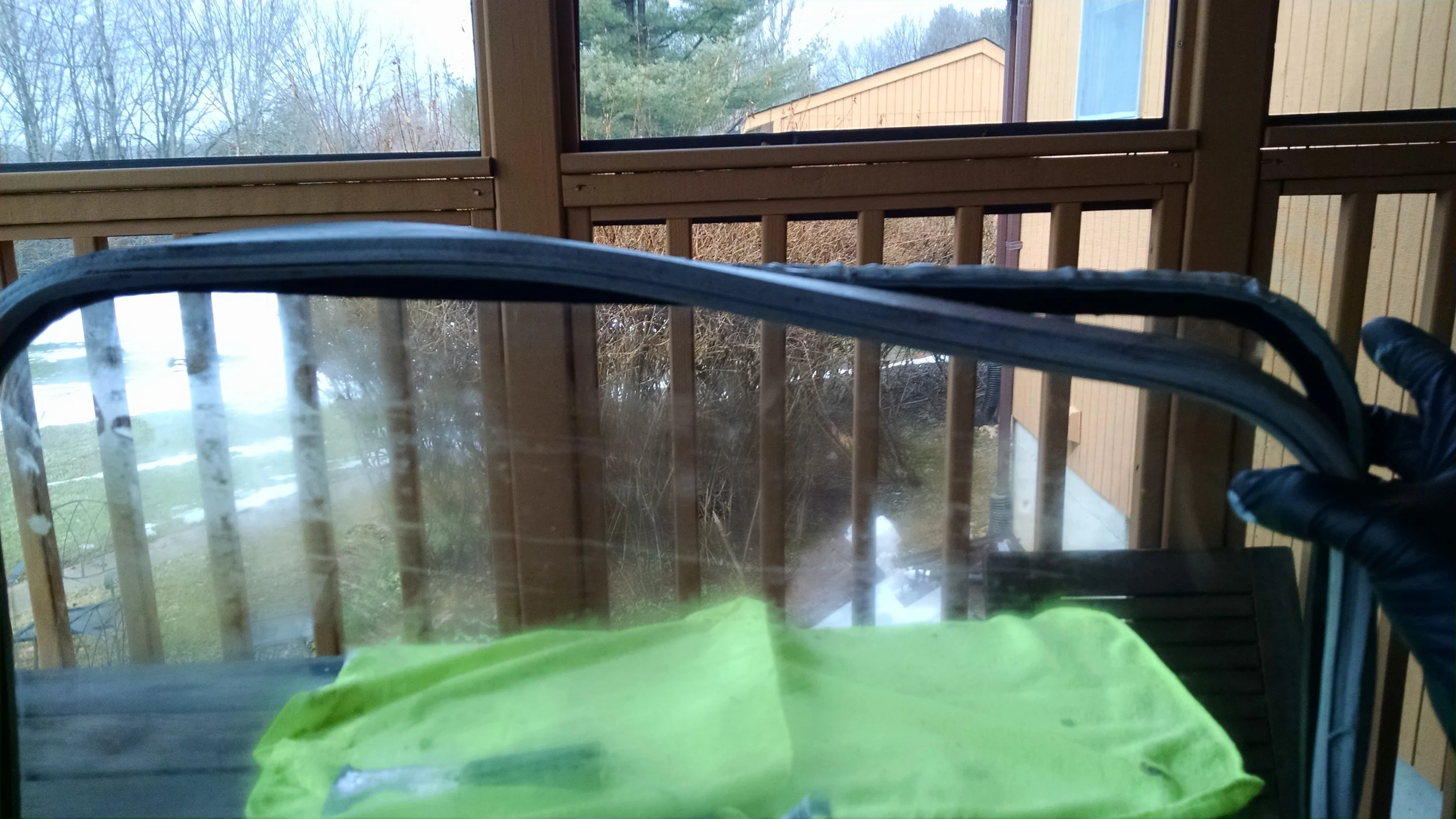
Just have to pry the rubber glazing strip over the glass, being very careful not to break the glass or the glazing strips.  This is not easy.

Kind of a mess, but I got it.  Now I just need to clean up all the TremPro.  Carb cleaner and a microfiber towel works pretty well while the TremPro is still wet.  Don't use Windex to clean Polyurethane sealant -- it prevents the sealant from curing properly.

Need a little help getting everything assembled, so I used ratchet straps.  Get the corners lined up, then screws back in.

Fresh new window.  Just need to clean up the old sealant from both the window and the trailer, rivet it back on, and seal everything up.

Edit 3/19/16: You need to seal the interior side of the corners where the straight aluminum piece meets the curved piece, especially the bottom.  That's one of the leak sources I found in this post. You probably don't need to seal the exterior side of the corner, but I'm guessing it wouldn't hurt.  There's a drain hole in the bottom outside of the window -- that's what it's for.

It's Electric!

This weekend, I finished completely removing and replacing the AC electric system with armored cable.  I rerouted a bunch of DC wires, and added a couple new runs.  I also installed the new 30A power inlet on the outside of the trailer.

I installed Reflectix insulation to the top half of the trailer, the part that will get the most sun.  This is the same radiant heat barrier that I installed below the subfloor, so it works best if it's facing an air gap.  Lots of people use strips of foam insulation to make shims, but I'm not counting on this for my only insulation, so I don't need it to be perfect.  I used 1/16" thick double-sided foam tape to mount the Reflectix, but I'm mostly counting on gravity to give me an air space above the shiny stuff.  Worst case scenario, in areas where the Rockwool pushes it against the outer skin, I'm still getting an R-1.1 out of the 5/16" layer, which is about the same R-value as 5/16" of Rockwool.   I used the same foam tape to insulate the ribs from the interior skin, which should help with heat conducting straight through the ribs.  Thanks to blogger Reinergirl and Capn Tom from Airforums for the idea. It took 5 rolls to do all the ribs and hang the Reflectix.

Some of these links are "affiliate links."  If you decide to buy something based on our recommendation, it would be nice if you used the direct link from this page so that we can make a small commission for referring you (which doesn't cost you anything extra).

AC ceiling assembly is installed temporarily to provide some heat while I work in 20 degree weather.  I have the new 30A inlet wired directly to the air conditioning power supply so I can plug it into the house.

I've read lots of people complaining about how little the heat strip on the Mach 8 cub produces, but it was enough to keep a 27' Airstream with very little insulation and a bunch of holes in the walls comfortable enough to work in jeans and a sweatshirt.  When it warmed up to 35 or so outside, I was working in a t-shirt just fine.

IMG_20160214_140935006.jpg

Some switches, outlets, odds and ends wired up.

Scare light installed.  Boo.

Deadbolt installed.  This is mostly to ensure the door doesn't accidentally fly open while we're moving.

Radio antenna.  I could make it straight up and down, but I like the jaunty look.

New 7-way trailer plug installed and wired up.  Added an extra set of running lights on the sides for visibility.  I was hoping I'd be able to wire the DC system to the accessory wire from the truck, but it didn't work.  I'll have to either resurrect the Univolt, or find some other way to temporarily power the DC system to test everything before I get the walls closed up.

Neither rain, nor snow, nor sleet...

Some of these links are "affiliate links."  If you decide to buy something based on our recommendation, it would be nice if you used the direct link from this page so that we can make a small commission for referring you (which doesn't cost you anything extra).

Dan and I carried the AC unit out today.  It was particularly challenging to navigate the snow mazes with the hundred-pound AC unit, but we got it up there with the help of the ladder and a blanket.  

Snowstream 2016

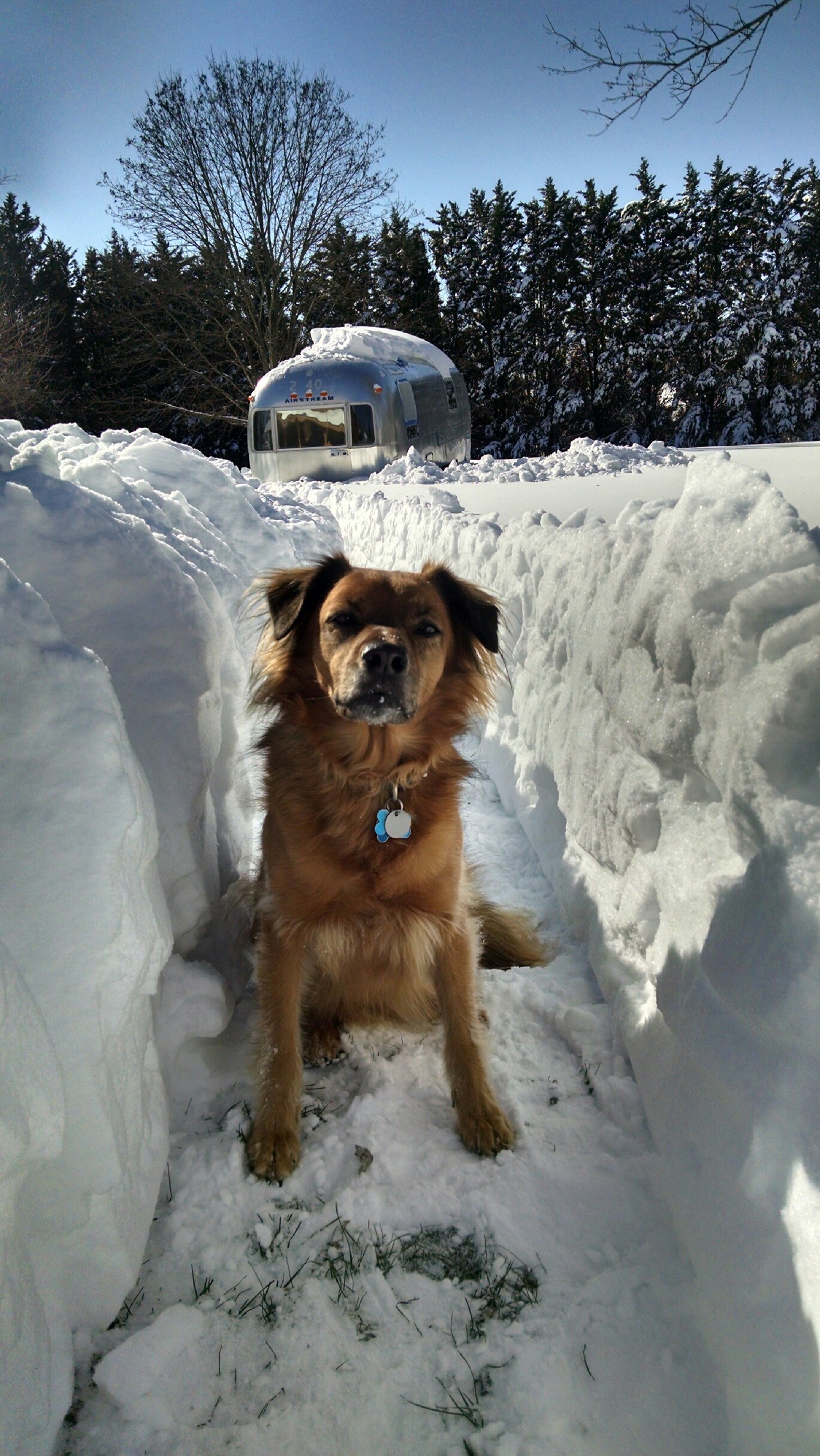
We got about 3 feet of snow dumped on us here this past weekend.  It's been about 6 years since we got this much snow all at once, so I guess we were due! It's hard to tell just how much snow this is in the photo, but some things have disappeared:

And the dog can't see over the snow.  

Dan dug a path down to the airstream, and of course Luna had to photo bomb the picture.  

He dug all the way around the airstream so the dog could have a track to run on (and also so he can do work).  She's a big fan of having somewhere to run again.  Poor dog's been a good sport for all the cold wet mazes we've put her in recently. 

The snow is making for fun hide and seek with her:  

It's Riveting! Get it?

Russell was kind enough to stop by and lend us his riveting skills.  Buck riveting takes two people, so it was a huge help to have a skilled helper.  Russ is A&P mechanic (Airframe and Power Plant), and learned how to rivet on airplanes.  Work went much faster this weekend thanks to his help.

But first, some practice on the old bellypan material that we aren't reusing. 

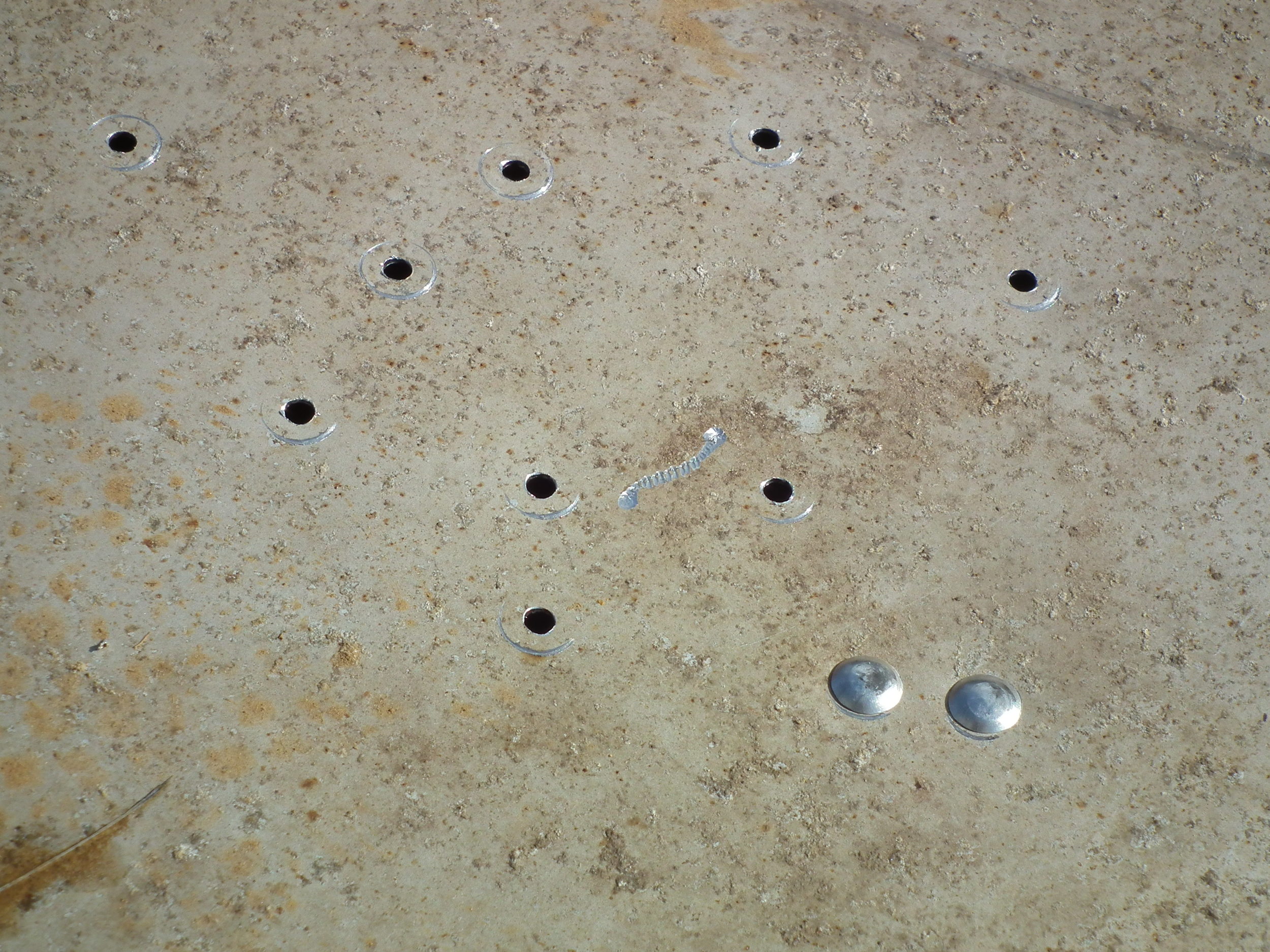
And now, for the real thing.  We reattached the awning bracket, plugged a bunch of screw holes left from removing the old air conditioner, riveted the sides of the shell to the f-channel attached to the subfloor on the sides of the coach, added a patch over the holes from the old antenna, and replaced a few leaky rivets.  With the exception of the plumbing vents, refrigerator vent, and few other odds and ends, the Airstream is mostly sealed up.

Here's Russ holding the bucking bar.  I'm on top with the rivet gun, hammering away on a rivet.  Russ is giving the rivet something to hit on the other side, which causes the shaft to flatten and widen, to create a water-tight seal.

Riveting the front hold-down plate.  The black pegs are called cleco fasteners.  They fit in a newly drilled hole to temporarily hold multiple sheets together while you're riveting nearby.  Very helpful.

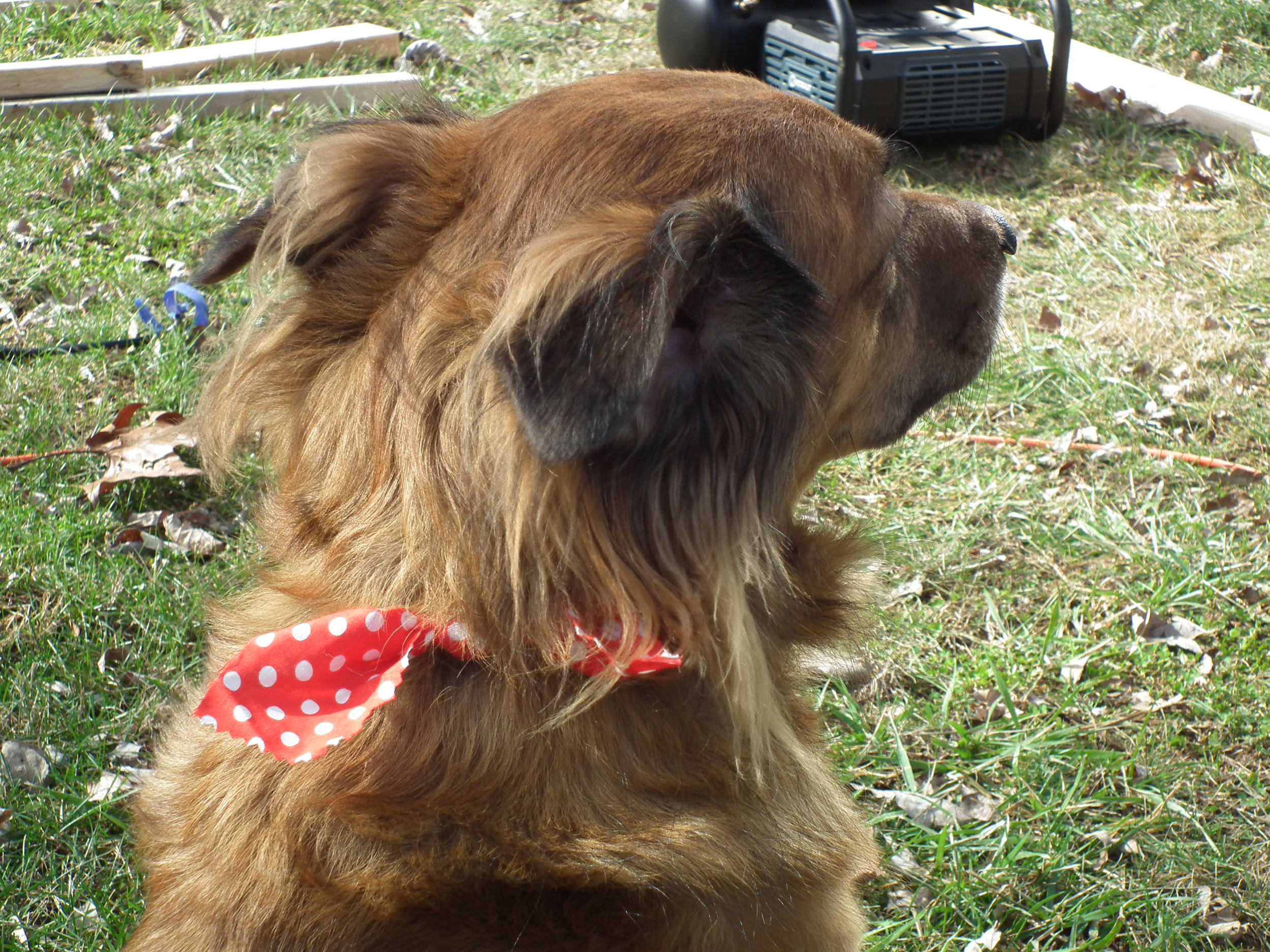
Moral support dog. 

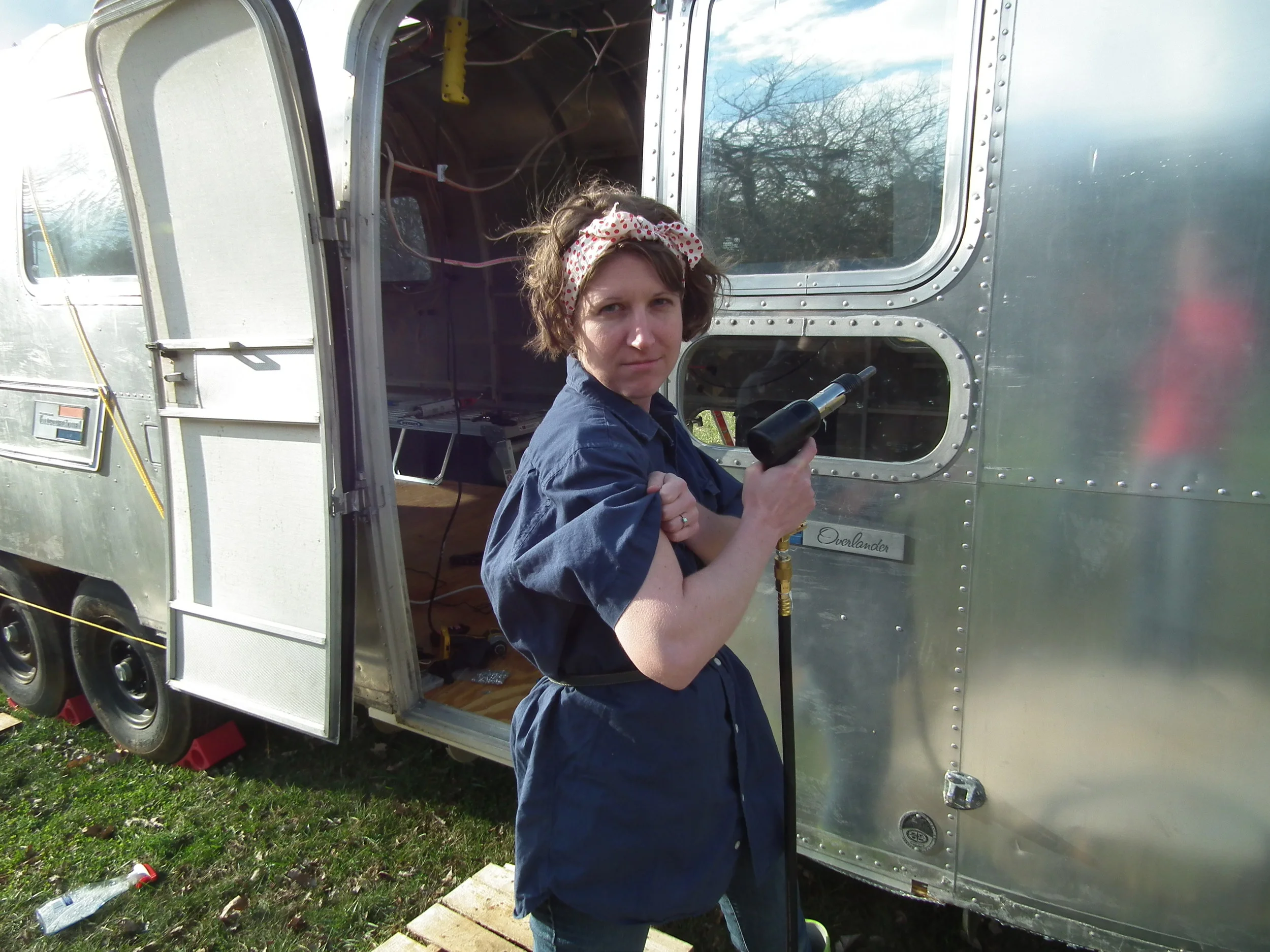
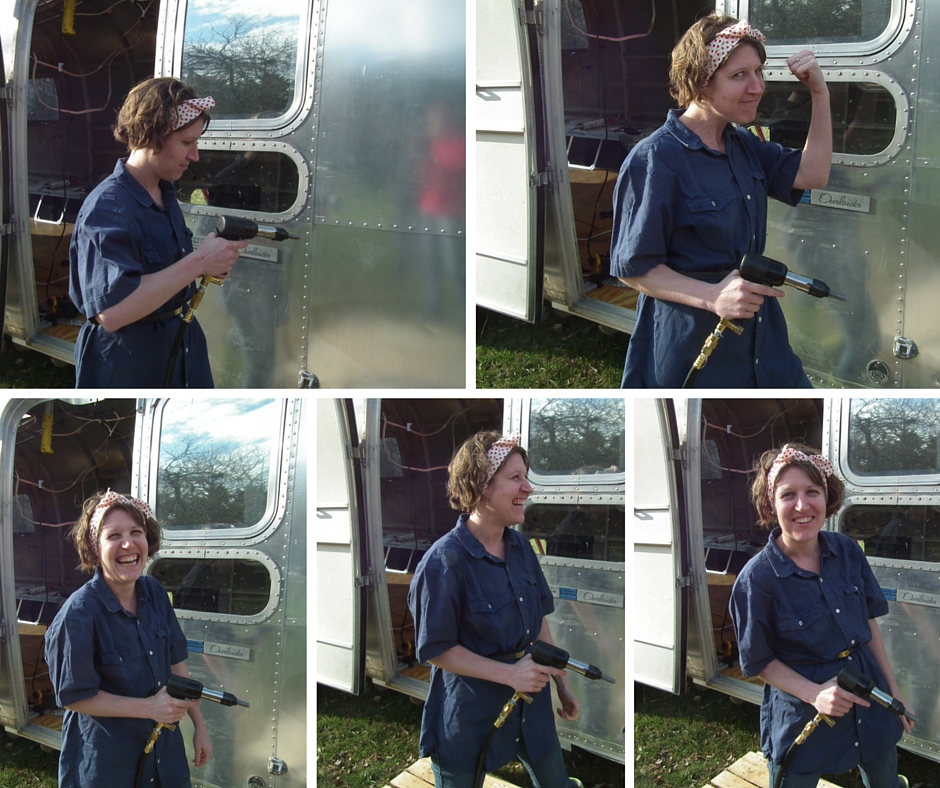
Leanne the Riveter.